

One source of truth: why shared KPIs matter in logistics
A shared understanding of performance starts before the first KPI is measured

How did we perform last month?
It sounds like a simple question.
But to answer it meaningfully, customer and logistics provider first need to agree on something fundamental: what good performance looks like.
Which KPIs matter? How are they defined and measured? And do those measures reflect the level of quality the customer expects?
That is where a shared view of performance begins.
Not with more data or more dashboards, but with a common understanding of what matters and how success will be measured.
Which KPIs matter? How are they defined and measured? And do those measures reflect the level of quality the customer expects?
That is where a shared view of performance begins.
Not with more data or more dashboards, but with a common understanding of what matters and how success will be measured.
It starts with alignment
Every logistics operation has different priorities.
That is why relevant KPIs should be aligned with the customer from the outset.
Take on-time delivery. It may sound straightforward, but both sides need a common understanding of how it is defined, which reference time is used and how performance will be assessed.
This alignment creates a common basis for evaluating service quality and helps ensure that the logistics provider's quality promise reflects the customer's expectations.
Only then can the numbers tell the same story.

From measurement to understanding
Agreeing on KPIs is only the starting point.
Performance needs to be monitored regularly so that deviations can be identified early and developments become visible over time.
But identifying a deviation is not enough.
This is where KPIs begin to move beyond reporting.
Performance needs to be monitored regularly so that deviations can be identified early and developments become visible over time.
But identifying a deviation is not enough.
- What happened?
- Why did it happen?
- And what needs to change?
This is where KPIs begin to move beyond reporting.
Better data, better conversations
A shared view of performance can also make customer conversations much more productive.
Instead of spending time asking:
Why is your figure different from ours?
the discussion can focus on:
Instead of spending time asking:
Why is your figure different from ours?
the discussion can focus on:
What happened, why did it happen and what can we improve?
Regular customer meetings provide an opportunity to review agreed KPIs together, discuss developments and identify areas for improvement.
The dashboard is therefore not the end result.
It is a starting point for better conversations.
Regular customer meetings provide an opportunity to review agreed KPIs together, discuss developments and identify areas for improvement.
The dashboard is therefore not the end result.
It is a starting point for better conversations.
From transparency to improvement
Transparency is not about displaying as much information as possible.
It is about making the right information clear, consistent and useful.
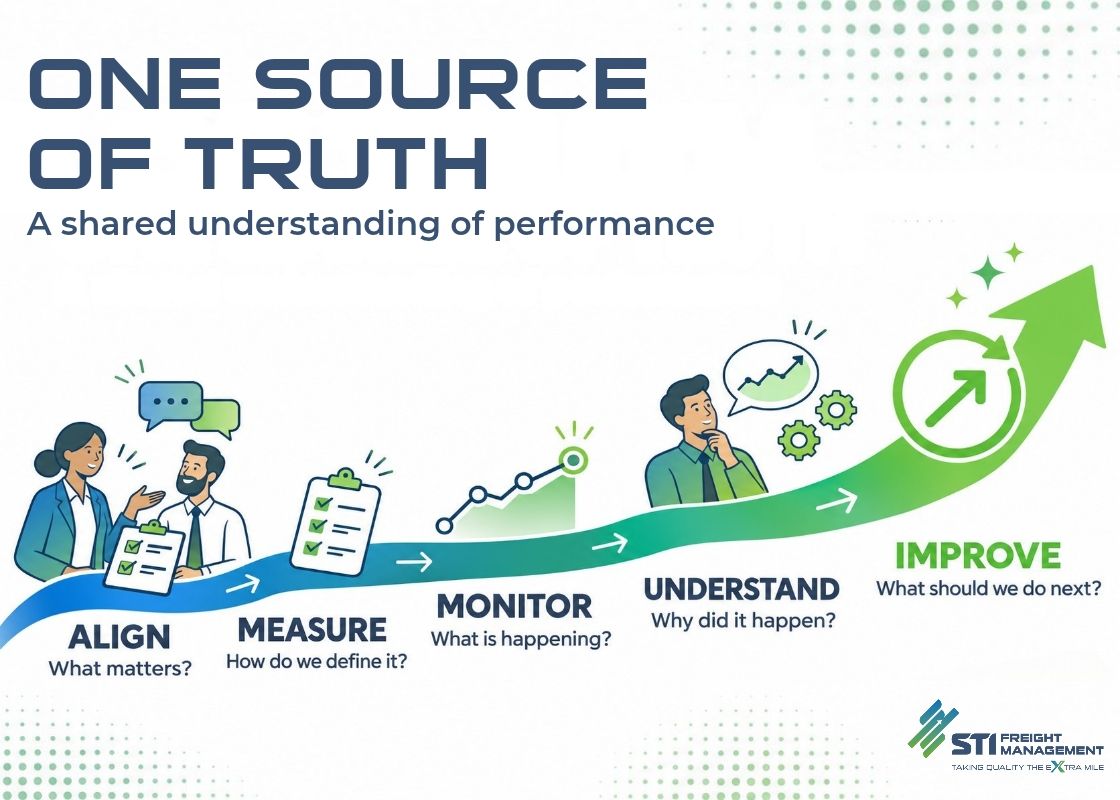
When customer and logistics provider share the same understanding of performance, KPIs can support a simple but valuable cycle:
Align → Measure → Monitor → Understand → Improve
And when a deviation occurs, the objective is not simply to record it. It is to understand the root cause and identify actions that can deliver sustainable improvement.
One source of truth is ultimately about trust
A single source of truth does not mean one perfect dashboard containing every possible piece of information.
It means that when customer and logistics provider discuss performance, they are starting from the same picture.
The same agreed KPIs.
The same definitions.
The same understanding of expectations and performance.
From there, the conversation can focus on what really matters:
What is working?
Where do we need to improve?
What should we do next?
Because transparency is not about showing more data.
It is about turning a shared understanding of performance into meaningful improvement.
