Maintaining Pharmaceutical Stability in Extreme Temperature Conditions
Protecting Product Stability Across the Cold Chain
For pharmaceutical manufacturers, biotech companies and clinical trial logistics teams, temperature control is not a technical detail. It is a critical condition for protecting product stability, shipment integrity and, ultimately, patient safety.
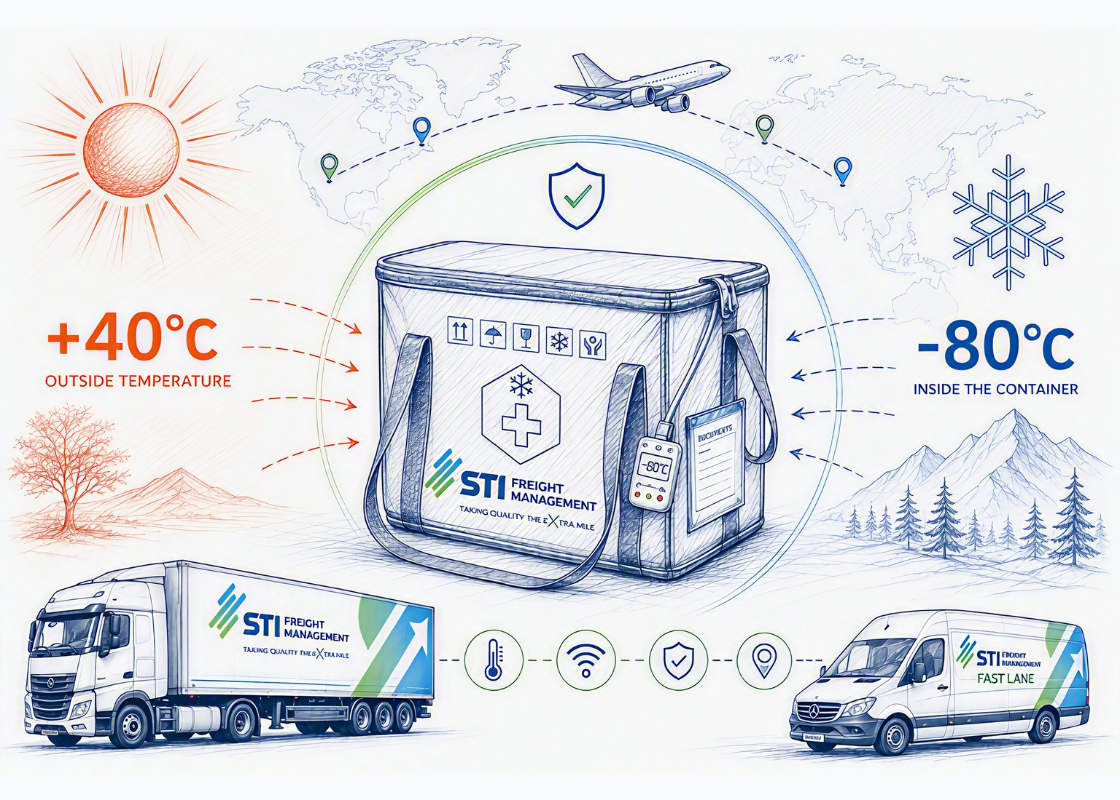
As summer temperatures in parts of Europe exceed +40 °C, the challenge becomes even more complex. Some pharmaceutical products must remain within refrigerated or controlled room temperature ranges, while others require deep-frozen conditions as low as -80 °C throughout the logistics chain. In this environment, every transfer, checkpoint and delay can create risk.
As summer temperatures in parts of Europe exceed +40 °C, the challenge becomes even more complex. Some pharmaceutical products must remain within refrigerated or controlled room temperature ranges, while others require deep-frozen conditions as low as -80 °C throughout the logistics chain. In this environment, every transfer, checkpoint and delay can create risk.
The challenge: protecting stability when external conditions are changing
Modern pharmaceuticals are no longer simply products moving from one location to another. Many are sensitive biological systems that need to remain within tightly defined temperature conditions from dispatch to delivery.
If the temperature moves outside the specified range, even for a short period, the result may be a temperature excursion that can compromise product efficacy. In severe cases, the entire shipment may be lost. This is no longer an exceptional scenario in pharmaceutical logistics. It is part of the everyday operating reality for supply chains moving vaccines, biotechnology products and clinical trial materials across regions, modes and climates.
The financial value of these shipments also increases the pressure on logistics performance. A single temperature excursion can result in the loss of pharmaceutical products worth hundreds of thousands or even millions, meaning that logistics precision has a direct connection to both business continuity and the safety of patient care.
If the temperature moves outside the specified range, even for a short period, the result may be a temperature excursion that can compromise product efficacy. In severe cases, the entire shipment may be lost. This is no longer an exceptional scenario in pharmaceutical logistics. It is part of the everyday operating reality for supply chains moving vaccines, biotechnology products and clinical trial materials across regions, modes and climates.
The financial value of these shipments also increases the pressure on logistics performance. A single temperature excursion can result in the loss of pharmaceutical products worth hundreds of thousands or even millions, meaning that logistics precision has a direct connection to both business continuity and the safety of patient care.
Cold chain risk is not only about arrival
In pharmaceutical logistics, the central question is not only whether a shipment arrives. It is whether the product remains in the same validated condition as when it was dispatched.
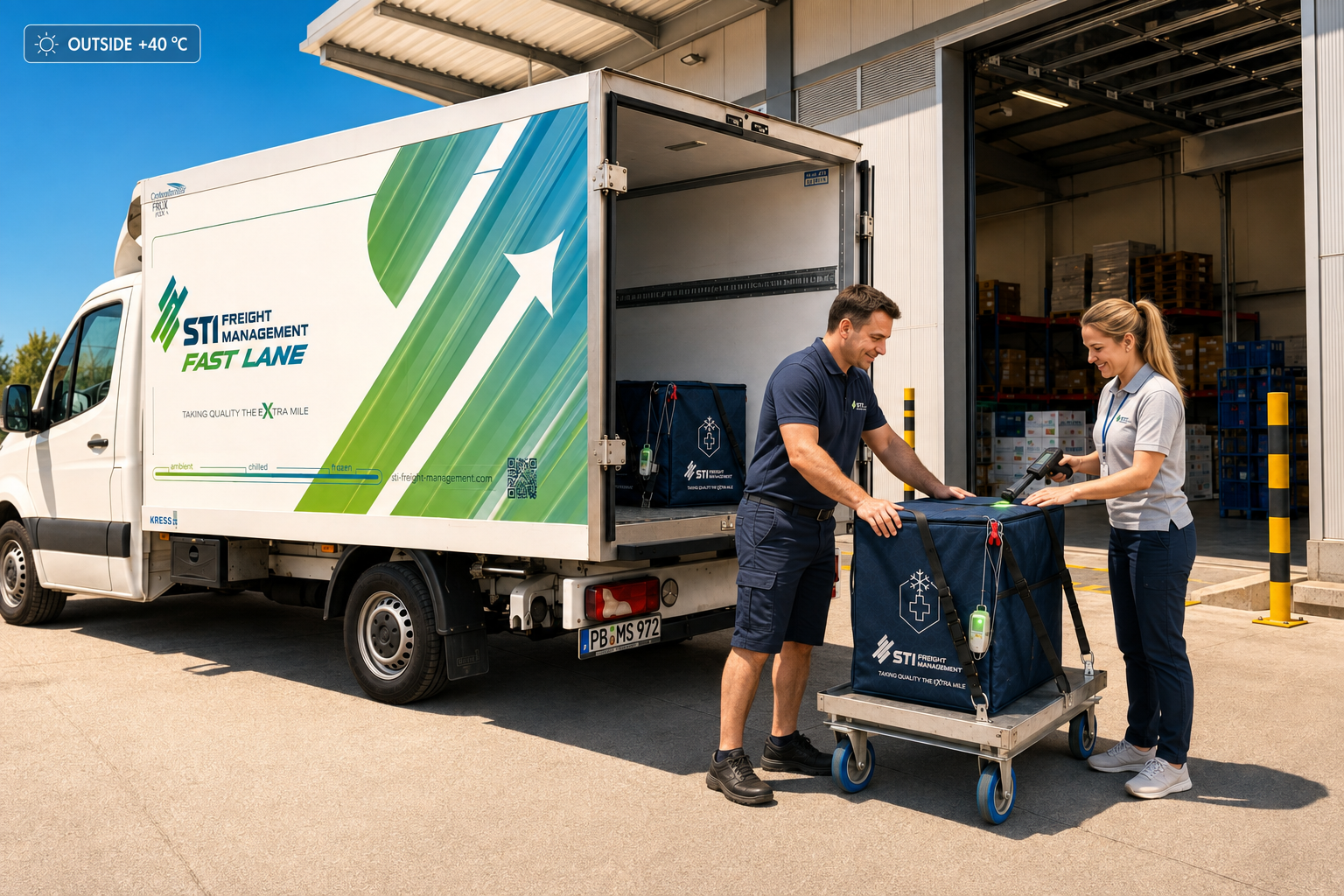
The most common temperature requirements include refrigerated conditions between +2 and +8 °C and controlled room temperature between +15 and +25 °C. However, pharmaceutical supply chains must also manage far more demanding requirements. STI Freight Management has documented a temperature difference of up to 120 °C between the external environment and the required transport temperature, where stability at -80 °C had to be maintained while the outdoor temperature reached +40 °C.
These conditions make cold chain planning, packaging selection, handover discipline and monitoring essential. Each stage of the journey must be designed to reduce exposure and maintain shipment integrity.
As pharmaceutical products become more specialised and temperature-sensitive, maintaining stability across increasingly complex supply chains is becoming an even greater challenge for manufacturers, logistics providers and clinical trial teams.
The most common temperature requirements include refrigerated conditions between +2 and +8 °C and controlled room temperature between +15 and +25 °C. However, pharmaceutical supply chains must also manage far more demanding requirements. STI Freight Management has documented a temperature difference of up to 120 °C between the external environment and the required transport temperature, where stability at -80 °C had to be maintained while the outdoor temperature reached +40 °C.
These conditions make cold chain planning, packaging selection, handover discipline and monitoring essential. Each stage of the journey must be designed to reduce exposure and maintain shipment integrity.
As pharmaceutical products become more specialised and temperature-sensitive, maintaining stability across increasingly complex supply chains is becoming an even greater challenge for manufacturers, logistics providers and clinical trial teams.
A fast-growing and increasingly
specialised market
The global pharmaceutical logistics market is worth approximately USD 110 billion, with temperature-controlled packaging among its fastest-growing segments. This area is growing by 15.5 percent annually and could expand to more than USD 60 billion by 2033.
Growth is being driven less by conventional pharmaceuticals and increasingly by next-generation biological and biosimilar products, as well as the continued expansion of clinical trials. These products place higher demands on cold chain design, packaging performance and operational control.
As pharmaceutical pipelines become more specialised, logistics solutions must be prepared for a wider range of temperature profiles, shorter timelines and more complex end-to-end visibility requirements.
Growth is being driven less by conventional pharmaceuticals and increasingly by next-generation biological and biosimilar products, as well as the continued expansion of clinical trials. These products place higher demands on cold chain design, packaging performance and operational control.
As pharmaceutical pipelines become more specialised, logistics solutions must be prepared for a wider range of temperature profiles, shorter timelines and more complex end-to-end visibility requirements.
Visibility and control across the transport chain
Pharmaceutical shipments typically pass through 10 to 15 checkpoints during transport. Across these stages, integrated sensors monitor temperature, humidity, vibration, package opening and GPS-based location.
This level of visibility helps operational teams identify potential risks early and protect shipment integrity throughout the journey. It also supports a more transparent approach to pharmaceutical logistics, where customers need reliable information on the condition and location of sensitive goods.
Monitoring is particularly important when shipments move across multiple transport modes, facilities and handling points. By combining planning, handling discipline and real-time visibility, logistics teams can respond more effectively to potential deviations before they become critical issues.
This level of visibility helps operational teams identify potential risks early and protect shipment integrity throughout the journey. It also supports a more transparent approach to pharmaceutical logistics, where customers need reliable information on the condition and location of sensitive goods.
Monitoring is particularly important when shipments move across multiple transport modes, facilities and handling points. By combining planning, handling discipline and real-time visibility, logistics teams can respond more effectively to potential deviations before they become critical issues.
Passive thermal containers for
demanding pharmaceutical shipments
Alongside monitoring and operational control, specialised packaging plays a critical role in maintaining pharmaceutical stability.
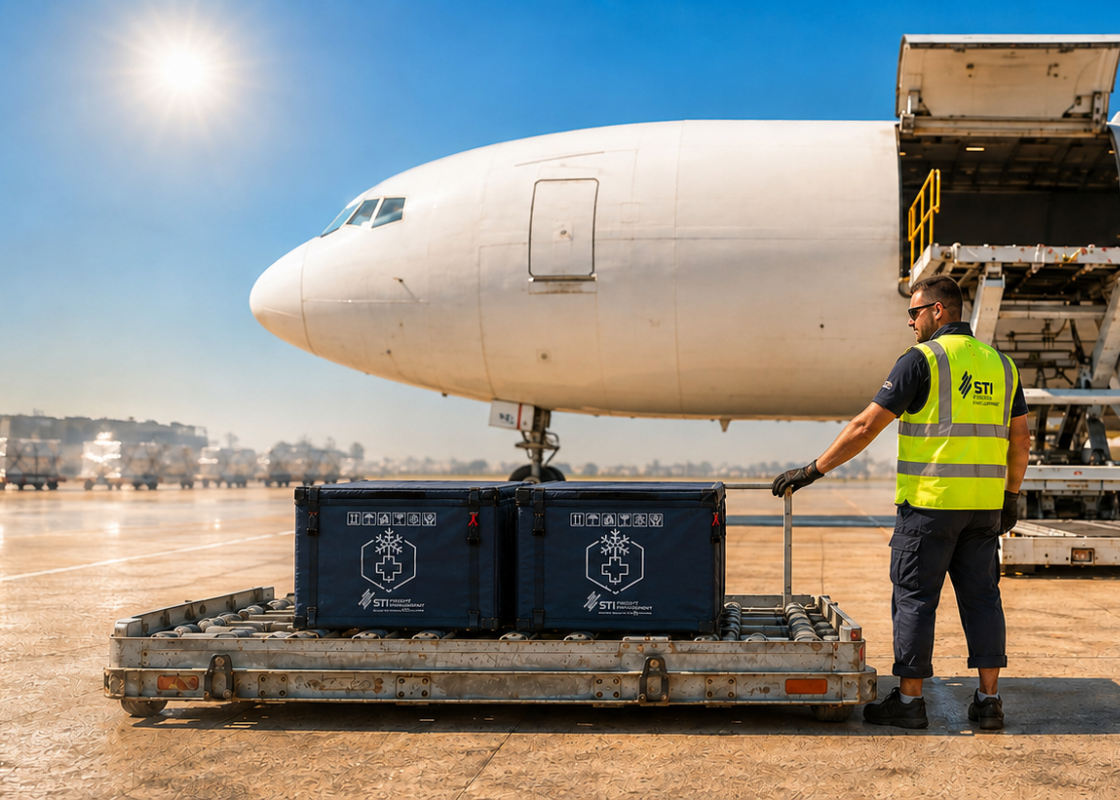
STI Freight Management's passive thermal container solution addresses this challenge by using a passive temperature-controlled system rather than relying on conventional active cooling. The preconditioned thermo containers use specialist thermal storage technology and can maintain a stable temperature for more than seven days without an external power source.
This capability is particularly relevant for pharmaceutical products where stability directly supports efficacy, including vaccines, biotechnology products and clinical trial materials. It also gives logistics teams greater resilience across complex transport routes, where shipments may pass through multiple handling points, vehicles or modes before reaching their destination.
For customers, the value lies not only in the container itself, but in how it is prepared and managed within a controlled logistics process.
STI Freight Management's passive thermal container solution addresses this challenge by using a passive temperature-controlled system rather than relying on conventional active cooling. The preconditioned thermo containers use specialist thermal storage technology and can maintain a stable temperature for more than seven days without an external power source.
This capability is particularly relevant for pharmaceutical products where stability directly supports efficacy, including vaccines, biotechnology products and clinical trial materials. It also gives logistics teams greater resilience across complex transport routes, where shipments may pass through multiple handling points, vehicles or modes before reaching their destination.
For customers, the value lies not only in the container itself, but in how it is prepared and managed within a controlled logistics process.
Future outlook: resilient cold chains for sensitive healthcare products
Extreme heat, deep-frozen requirements, multimodal transport and growing clinical trial activity are reshaping expectations for pharmaceutical logistics.
Pharmaceutical supply chains increasingly depend on a combination of validated equipment, robust preparation processes, experienced operational teams and end-to-end visibility.
Passive thermal container solutions will play an increasingly important role where shipment integrity must be protected without dependence on external power throughout the journey. For pharmaceutical manufacturers, biotech companies and clinical trial logistics providers, this can support greater resilience when moving high-value and highly sensitive products through increasingly complex supply chains.
As the pharmaceutical market continues to evolve, maintaining stability will remain one of the defining measures of logistics quality.
Pharmaceutical supply chains increasingly depend on a combination of validated equipment, robust preparation processes, experienced operational teams and end-to-end visibility.
Passive thermal container solutions will play an increasingly important role where shipment integrity must be protected without dependence on external power throughout the journey. For pharmaceutical manufacturers, biotech companies and clinical trial logistics providers, this can support greater resilience when moving high-value and highly sensitive products through increasingly complex supply chains.
As the pharmaceutical market continues to evolve, maintaining stability will remain one of the defining measures of logistics quality.